

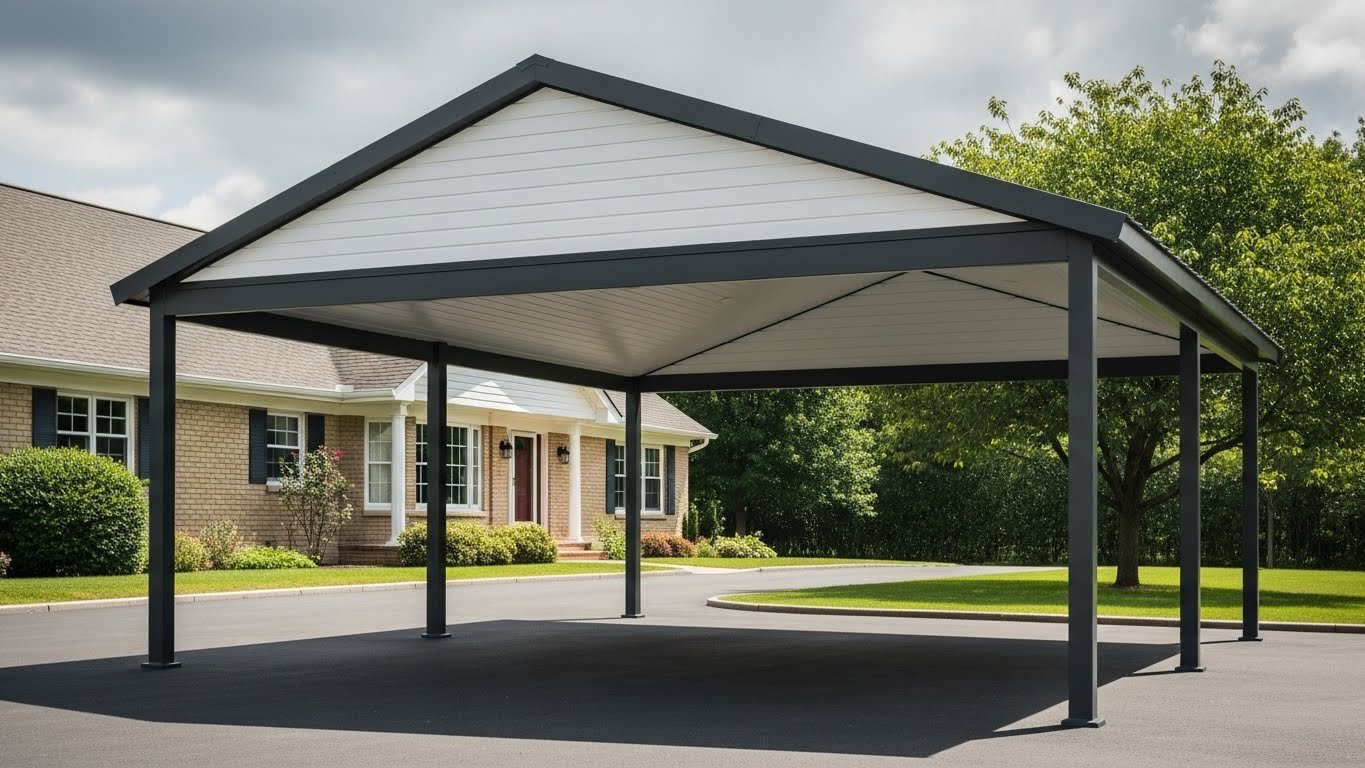
A single carport sounds like a great addition, doesn’t it? Your car stays protected, you get some extra functional space, and buyers tend to pay more when you sell your home. But here’s the thing—you’ll want to slow down just a bit before making any decisions. A bit of planning now will save you from some serious hassles down the track.
We’ve put together a checklist of what you need to look at before you buy.
1. Measure Your Available Space
Right, so you’ll want to measure up the area first. Length, width, height—get all of it down. Most single carports sit at roughly 3 metres by 6, give or take, but don’t get too hung up on that. Your ute or sedan might need something different, and every driveway’s got its quirks.
Make sure you account for:
- Vehicle size plus door opening space – there’s no point having a carport if you can’t open your door properly.
- Clearance from property boundaries – your council probably has rules about how close you can build to the fence line.
- Overhead clearance – look up and check for tree branches, power lines, or your house eaves getting in the way.
Here’s something people often miss: will the installation crew actually be able to get their truck down your driveway? Do they have enough space to move materials around? Sort out these practical bits early.
2. Check Local Council Requirements
Every council in Australia does things a bit differently—you might be fine to build something in your suburb that your mate two towns over can’t touch. Look into the setback rules, height limits, and whether you’ll be filling out permit applications. In some cases, your carport might count as exempt development, which means no council approval is needed. But don’t just assume you’re in the clear.
Ring your local council or have a look at their website before you commit to buying anything. These rules will dictate exactly where you can put your carport and what styles you can actually go with.
3. Check Your Ground Conditions
Carports need stable, level ground to stand safely. A careful and quick assessment can save problems down the track.
Check the following:
- Slope and gradient – is the area relatively flat or does it slope significantly?
- Soil stability – soft or sandy soil might need extra foundation work.
- Drainage – does water pool after rain?
- Existing surfaces – are you installing on grass, concrete, or gravel?
4. Identify Underground and Overhead Obstacles
Hidden obstacles cause the biggest installation problems. Survey your chosen area carefully for potential issues.
Underground hazards:
- Water pipes
- Sewerage lines
- Electrical cables
- Irrigation systems
Overhead concerns:
- Power lines
- Tree branches
- Existing structures or overhangs
These obstacles affect both placement options and installation safety. Take them seriously.
5. Consider Your Budget Beyond the Purchase
What you see on the price tag isn’t the full story. You need to think about the actual total you’ll be spending.
There’s site prep to consider, a concrete slab if you need one, getting it delivered and installed, plus any council fees or permit costs. Then you’ve got extras—guttering, extra posts, maybe closing in a side or two. It all stacks up faster than you’d think.
And look, don’t cheap out on materials. Australia’s weather is brutal, and flimsy stuff just won’t hold up over time.
Get the Perfect Single Carport Now!
Completing this homework upfront saves significant time and money. Work through each checklist item systematically before you start shopping around.
When you’re ready, explore quality single carport options designed for Australian conditions. Your future self will thank you for doing the preparation properly!