

In today’s fast-paced digital marketplace, brand identity is everything. But what happens when your data tells a different story? Enter the realm of brand name normalization—a crucial practice that ensures your business information remains consistent and accurate across all platforms. Whether you’re managing an e-commerce site or analyzing customer feedback, having standardized brand names can make a world of difference. It not only enhances clarity but also boosts credibility in the eyes of consumers.
Imagine navigating through a sea of variations: “Nike,” “NIKE,” and even “nIke.” These discrepancies can lead to confusion for both customers and systems alike. The stakes are high, as inconsistent branding can impact sales, marketing efforts, and overall customer trust.
Let’s dive into why establishing robust Brand Name Normalization Rules is essential for achieving data consistency that drives success in today’s competitive landscape.
What is Brand Name Normalization?
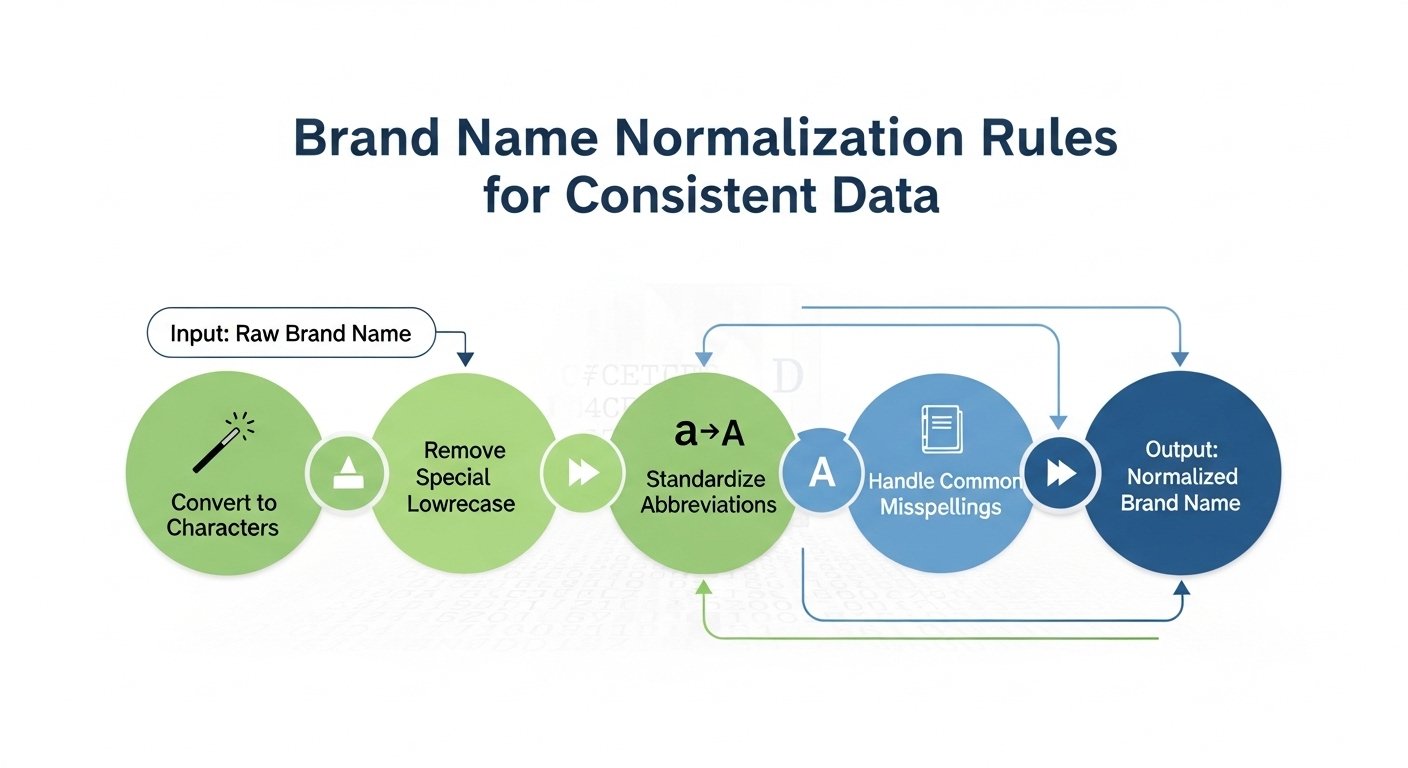
Brand name normalization is the process of standardizing variations of brand names to create a consistent reference. It involves identifying different spellings, abbreviations, and even typos that can occur across various data sources.
For instance, you might encounter “Coca Cola,” “Coke,” or even “coca-cola.” Each variation represents the same brand but can lead to confusion in databases and analytics.
This practice plays a crucial role in maintaining accurate records. When every mention of a brand aligns with its official name, it enhances clarity for both internal teams and customers.
Moreover, effective normalization facilitates better reporting and analysis. With uniform data at your fingertips, businesses can make informed decisions based on reliable insights. It’s about ensuring that everyone speaks the same language when it comes to branding—making communication seamless and efficient.
Why is it Important for Data Consistency?
Data consistency is crucial for effective decision-making. When brand names are inconsistent, it creates confusion among stakeholders. This can lead to misinterpretation of data and poor business choices.
Accurate brand representation ensures that marketing efforts resonate with the target audience. Inconsistent branding can dilute a company’s message, ultimately affecting customer loyalty.
Moreover, reliable data enhances reporting accuracy. Teams rely on this information for analytics and strategy development. Erroneous or varied brand names disrupt these processes and increase operational risks.
Additionally, consistent data fosters trust within an organization. Employees need confidence in the systems they use daily. Without uniformity in brand naming conventions, skepticism creeps into workflows.
Maintaining clear standards supports scalability as businesses grow. As new products or services are introduced, consistent naming helps integrate them seamlessly into existing structures without causing friction or misunderstandings.
Common Issues with Inconsistent Brand Names
Inconsistent brand names create chaos. When variations occur, it leads to confusion among customers and staff alike. Imagine searching for a familiar product only to find multiple listings under different names.
This inconsistency can affect search engine optimization (SEO). Brands might lose visibility online if their name appears in various formats across platforms. This fragmentation dilutes brand identity and hampers recognition.
Data analysis becomes problematic as well. Analysts struggle to derive accurate insights when data is scattered across numerous versions of a brand name. Decision-making suffers as a result.
Additionally, marketing efforts can become less effective. Campaigns may target the wrong audience due to misidentified brands, resulting in wasted resources and missed opportunities.
Customer trust also takes a hit. A confused customer base is unlikely to remain loyal when they can’t identify or reliably engage with a brand consistently.
The Role of Automation in Brand Name Normalization
Automation plays a crucial role in brand name normalization by streamlining the process. Manual entry can lead to errors, inconsistencies, and significant time loss. Automating this task helps maintain accuracy across databases.
Advanced algorithms can identify variations in brand names quickly. They analyze patterns and suggest standard formats, reducing human error significantly. This ensures that every instance of a brand name is uniform.
Moreover, automation supports scalability. As businesses grow, so does their data volume. Automated systems easily adapt to increasing workloads without sacrificing quality or speed.
Integration with existing systems enhances efficiency further. By synchronizing with Customer Relationship Management (CRM) platforms or data management tools, automated solutions provide seamless updates and corrections.
Relying on automation not only saves resources but also fosters trust in data integrity among stakeholders and teams alike.
Best Practices for Implementing Brand Name Normalization Rules
Establishing clear guidelines is essential. Create a comprehensive list of accepted brand names, ensuring all team members have access to it. This eliminates confusion and promotes uniformity.
Regularly review and update the list as new brands emerge or existing ones change their identities. Flexibility in your rules will maintain relevance over time.
Employ a centralized database for storing normalized names. A single source of truth reduces discrepancies across platforms and prevents miscommunication between departments.
Training staff on these normalization rules is crucial. When everyone understands the importance of consistency, adherence becomes second nature.
Consider leveraging technology to automate parts of the process. Tools that flag inconsistencies can save time while allowing teams to focus on strategic tasks rather than manual checks.
Encourage feedback from users interacting with the system. Their insights can identify gaps or challenges, paving the way for continuous improvement in your normalization practices.
Case Studies: Successful Implementation of Brand Name Normalization
Company A faced significant challenges with brand name inconsistency across their marketing channels. Customers were confused by varying spellings and abbreviations. To address this, they implemented a standardized set of brand name normalization rules.
They created a centralized database that outlined the preferred formats for each brand. For example, “Coca-Cola” was always used instead of casual variations like “Coke”. This clarity improved customer recognition and streamlined communications.
Similarly, Company B discovered discrepancies in product listings on e-commerce platforms. After applying normalization rules, all product entries featured consistent naming conventions. The result? Enhanced searchability and higher conversion rates.
Both companies reported increased customer trust after standardizing their approaches to branding. Their experiences showcase how thoughtful implementation can lead to measurable improvements in data integrity and overall business performance.
The Impact of Consistent Data on Business Success
Consistent data serves as the backbone of effective business operations. When brand names are normalized, organizations can achieve seamless communication across departments and stakeholders. This consistency fosters a clearer understanding of customer interactions and preferences, leading to better decision-making.
When customers encounter the same branding in all communications and platforms, their trust deepens. Consistency assures them that they are dealing with a reliable brand. This trust translates into loyalty—an invaluable asset for any business looking to thrive in competitive markets.
Moreover, consistent data enhances reporting accuracy. Businesses can analyze performance metrics without confusion or misinterpretation arising from differing brand name formats. Precise analytics lead to targeted marketing strategies that resonate with audiences more effectively.
In a world where data drives decisions, adopting robust brand name normalization rules is essential for sustained success. By prioritizing this practice, companies not only enhance their operational efficiency but also position themselves favorably in an ever-evolving market landscape.