

Key Takeaways
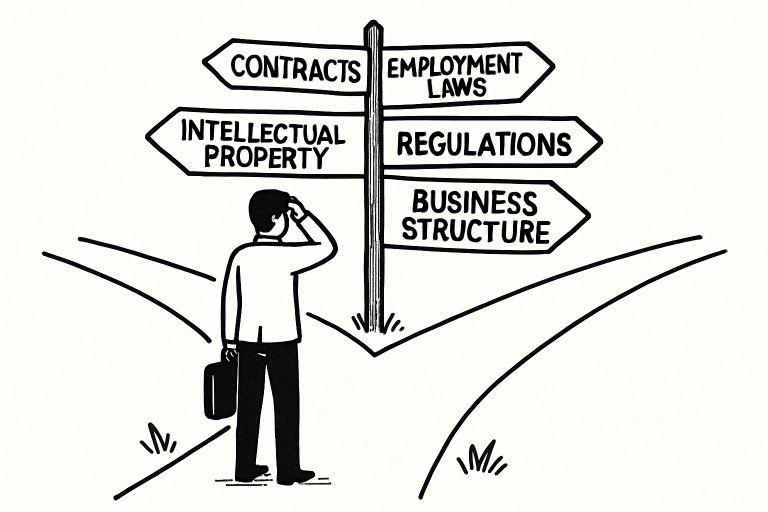
- Choosing the appropriate business structure is foundational for liability and tax considerations.
- Comprehensive contracts are vital to protect business interests and prevent disputes.
- Adherence to employment laws ensures a compliant and harmonious workplace.
- Protecting intellectual property secures your business’s unique assets.
- Staying informed about regulatory changes helps maintain compliance and avoid penalties.
Table of Contents
- Selecting the Right Business Structure
- Crafting Comprehensive Contracts
- Navigating Employment Laws
- Safeguarding Intellectual Property
- Staying Abreast of Regulatory Changes
- Conclusion
Launching a new business is filled with excitement and opportunity, but it also brings a web of legal challenges that can severely impact your success if not addressed early on. From determining the best business structure to understanding contracts and intellectual property, entrepreneurs face pivotal decisions at every step. Consulting with experienced business lawyers, such as the best business lawyers in Colorado, can provide valuable clarity and ensure your venture starts on a solid legal foundation.
Legal missteps are a common cause of setbacks for startups, often leading to unnecessary costs, prolonged disputes, or even the failure of a promising business. That’s why proactive legal planning is essential—not just to shield your operations from risk, but also to foster credibility and long-term growth. Grasping key legal concepts allows entrepreneurs to avoid pitfalls, protect their interests, and maintain the freedom needed for innovation in a fast-paced marketplace.
Staying ahead of legal requirements gives you the confidence to make strategic decisions, respond swiftly to changes in regulations, and develop strong contracts that guard against ambiguity. Clear guidance on employment rules, intellectual property protection, and regulatory compliance is essential for a thriving and resilient business.
By addressing these essential legal considerations from the outset, you can lay a strong foundation for your company, anticipate challenges, and focus your energy on bringing your vision to life.
Selecting the Right Business Structure
The legal structure you choose profoundly affects your business’s liability exposure, tax strategy, and even your ability to raise capital. Options include sole proprietorships, partnerships, limited liability companies (LLCs), and corporations. Each type offers different protections and obligations. For example, an LLC provides personal liability protection and flexible tax benefits, making it a common choice for startups looking to balance risk and reward.
Selecting the optimal structure is not a one-size-fits-all decision. It should reflect your long-term strategy, the nature of your industry, and the expectations of your investors. Seeking advice from a business attorney and a CPA can help prevent costly missteps and streamline your path to scaling your business. Additional guidance is available from credible business resources, such as the U.S. Small Business Administration.
Crafting Comprehensive Contracts
Contracts serve as the backbone for every business relationship, from vendor agreements to employment offers and customer terms. Clear, well-drafted contracts reduce the risk of misunderstandings and legal conflicts by specifying each party’s rights, duties, payment terms, and dispute resolution procedures. Overlooking crucial details or using generic templates can expose entrepreneurs to significant risks, including revenue loss and reputational harm.
It’s wise to have all contracts reviewed by legal professionals, as they can spot and remedy loopholes or ambiguous language that may undermine your protection. Regular contract audits and updates are also recommended, particularly in industries where the legal and regulatory environments are evolving rapidly. For more on drafting and managing effective contracts, see this helpful article from Entrepreneur.
Navigating Employment Laws
Employment law compliance is critical for creating a productive, inclusive, and legally compliant workplace. These laws encompass a range of regulations, including wage and hour rules, anti-discrimination policies, wage transparency requirements, and workplace safety standards. Failing to comply exposes businesses to lawsuits, government fines, or public scrutiny.
Key Areas of Compliance:
- Wages & Overtime: Ensure pay practices conform to the Fair Labor Standards Act (FLSA) and state-specific regulations.
- Discrimination: Adhere to rules under the Equal Employment Opportunity Commission (EEOC) regarding fair hiring, promotion, and termination practices.
- Workplace Safety: Meet Occupational Safety and Health Administration (OSHA) requirements for safety training and hazard prevention.
Review and update your employee handbook frequently and provide ongoing training to staff and managers. Up-to-date guidance on federal requirements is available from the U.S. Department of Labor.
Safeguarding Intellectual Property
Your brand identity, creative work, inventions, and trade secrets are critical assets—often making up a significant portion of your company’s value. Protecting intellectual property (IP) deters infringement and preserves your competitive edge. Registration of trademarks, patents, and copyrights establishes legal ownership and provides recourse in the event of unauthorized use.
Neglecting IP protection can result in financial losses and a decline in market share. Entrepreneurs should conduct IP audits regularly and secure the necessary registrations before launching new products or services to the public. Utilizing non-disclosure agreements and proper documentation will also help deter misappropriation by employees or business partners.
Staying Abreast of Regulatory Changes
The regulatory framework governing business is constantly evolving, with new state and federal laws, such as the Corporate Transparency Act, introducing novel compliance obligations. Staying informed of these changes is vital to preventing penalties, missed opportunities, or downtime caused by noncompliance. For example, a recent court injunction has suspended certain enforcement efforts, leaving compliance requirements in flux for many companies.
Entrepreneurs should subscribe to industry updates, actively participate in trade organizations, and schedule periodic reviews with legal counsel to stay informed about the latest developments and best practices.
Conclusion
Legal planning is a critical foundation for entrepreneurial success, empowering startups and small businesses to navigate risks and focus on growth with confidence. By addressing business structure, contracts, employment regulations, intellectual property rights, and industry-specific compliance requirements early, owners can prevent costly disputes and operational setbacks. Thoughtful legal preparation not only safeguards assets but also provides the flexibility to pursue opportunities, attract investors, and scale operations effectively. Engaging experienced legal counsel ensures that decisions are informed, strategic, and aligned with long-term objectives, helping entrepreneurs build resilient businesses that can thrive in competitive and evolving markets while minimizing legal exposure.